
Reflected light
We see the red tile underwater thanks to light that falls on it and bounces back to us.
AHA! WITHOUT BORDERS · AHA! Planet of Wonder
A picture story about light made by living things.
Illustrations of natural phenomena

1 / 5
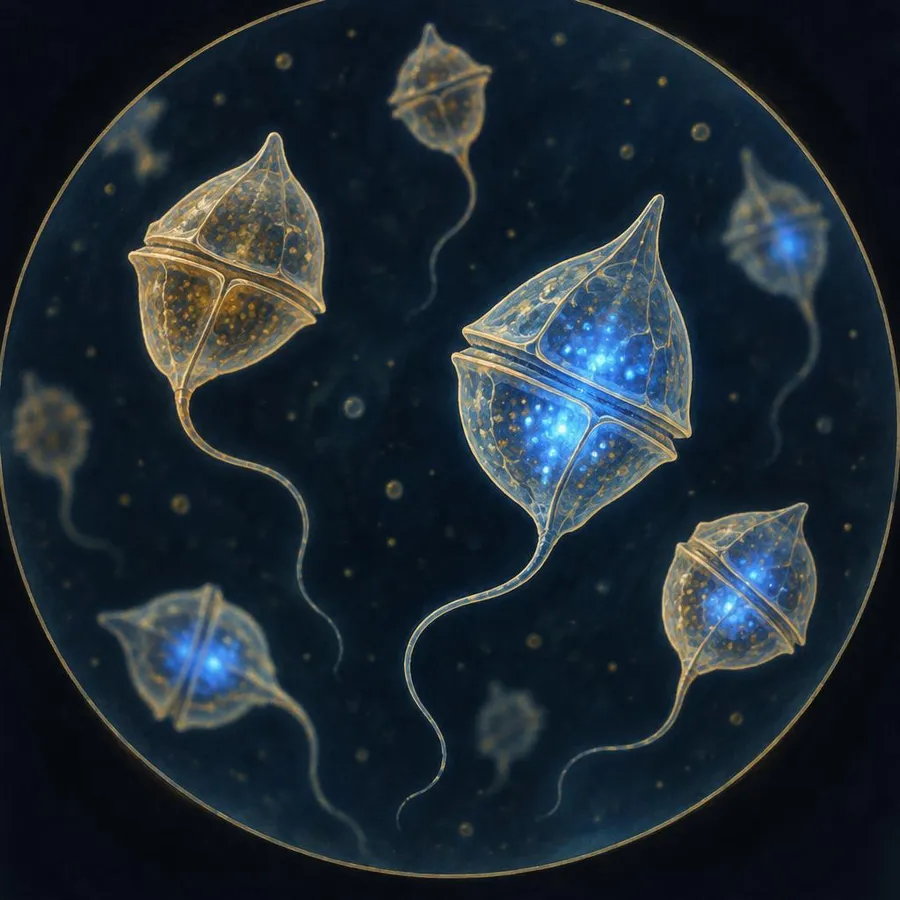
It is night. A wave breaks on the shore and for a moment it lights up with blue sparks. It looks as if someone had scattered stars into the water. What is going on?
This kind of glow can be made by tiny organisms in the plankton, for example some dinoflagellates. Moving water can trigger a short flash in them.
It is the organisms in the water that glow, not the water itself.
2 / 5
Bioluminescence is light produced by a chemical reaction inside a living organism or in a glowing substance it releases. In some animals, the light is made by bacteria that live with them.
It isn't a torch reflection or a paint that has to be charged in the sun first.
In the reaction, chemical energy is turned into light. Organisms make light in different ways. Many of these reactions use a light-emitting substance called luciferin.
3 / 5
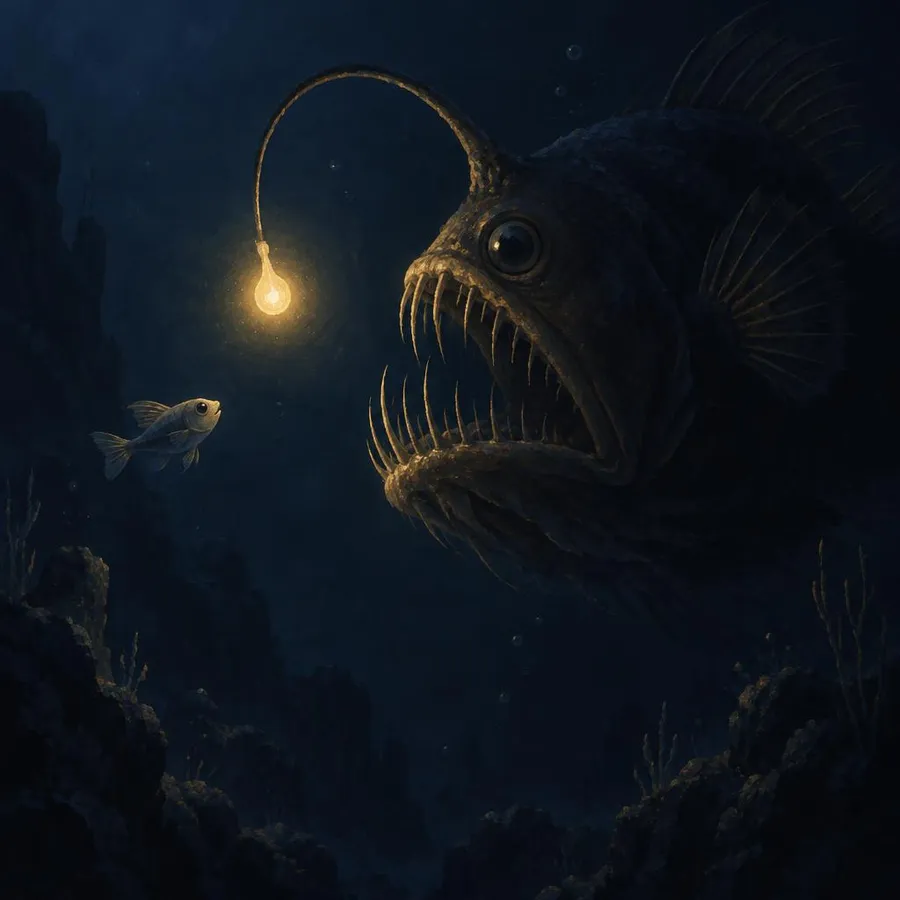
Some deep-sea fish use a glowing lure that can attract prey towards their mouth. In these anglerfish, the light is made by bacteria living in the lure.
4 / 5
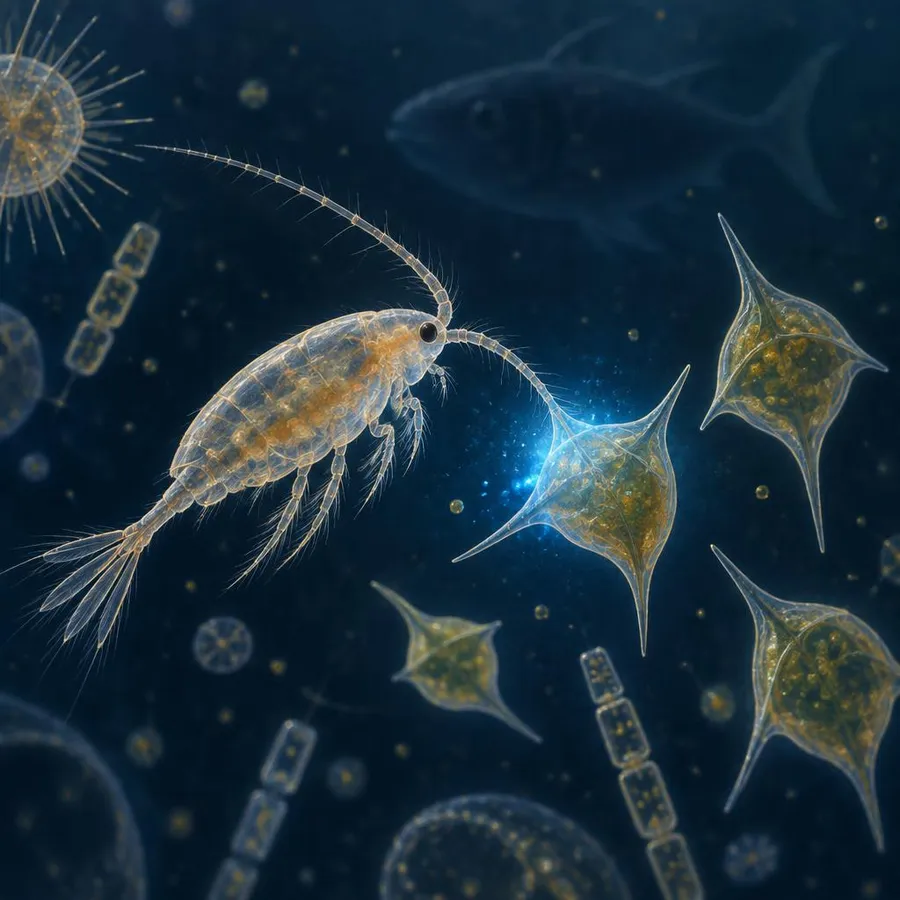
Light can also help with defence. In some dinoflagellates, a flash can disrupt an attack or draw a bigger predator's attention to the animal that is eating them.
A light alarm can give the attacker away.
5 / 5
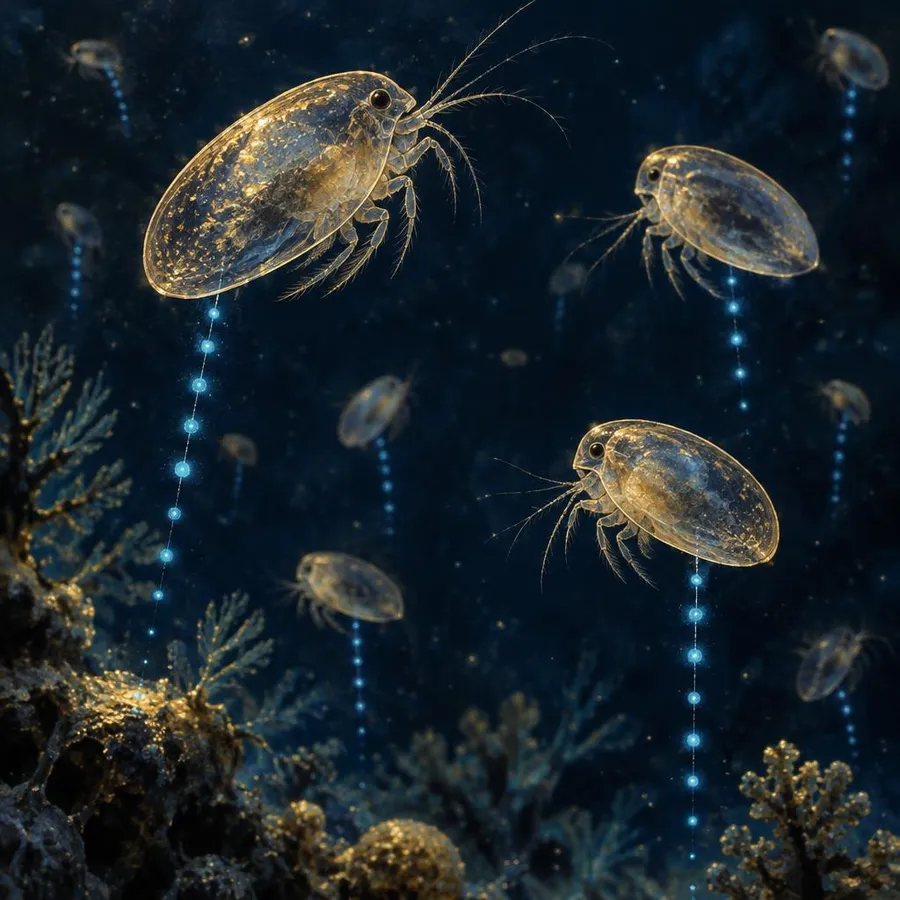
Males of some Caribbean ostracods, tiny crustaceans, release a glowing substance into the water. They create sequences of light dots to attract females.
In the ocean, light can help to find food, to defend yourself and to find a partner.
Illustrations of natural phenomena
We see the red tile underwater thanks to light that falls on it and bounces back to us.
In bioluminescence, light is produced by a chemical reaction. The organism doesn't need a torch shining on it to create this glow.
Links open in a new tab.
Hlavní předmět: Biology (grades 6–8, approx.)
Souvisí také s: Chemistry, Physics
The classroom for this subject is still being prepared.